
Indian benchmark indices Sensex and Nifty rallied in early trade, driven by a significant decline in Brent crude oil prices, which fell below the USD 73 per barrel level, and positive trends observed across most Asian equities.

Indian benchmark equity indices, Sensex and Nifty, rebounded nearly 1 per cent, with the Sensex jumping 790.54 points to 76,991.22, driven by softening crude oil prices and strong buying in banking, financial, and IT shares.

Captain Bharat Bhardwaj proposed to his partner at the Combat Army Aviation Training School near Nashik, Maharashtra, immediately after his passing-out parade, with a video of the romantic gesture quickly going viral on social media.

It is an unusual choice to depute a retired general for the funeral of a revered religious figure but a thoughtful one in an attempt to inject verve into the bilateral relationship and restore the equilibrium in India's West Asian policies, notes Ambassador M K Bhadrakumar.

'A lot of people feel there is pressure on the AAIB not to go against Boeing or GE -- both enormous American companies.' 'If the AAIB implicates Boeing or GE, it will impact their sales.' 'If their sales are impacted, jobs are lost in the United States. No government would willingly do that.'

Akasa Air, despite facing headwinds from the West Asia conflict and rising aviation turbine fuel prices, expects to maintain a 30-40 per cent growth trajectory over the next five years and aims for an initial public offering (IPO) within two to four years, according to CFO Ankur Goel.
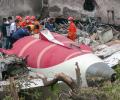
'...because that protects their aviation industry.' 'The Boeing 787 is one of the most widely-flown wide-body aircraft in the world, and Airbus is running neck-and-neck with Boeing.' 'Airbus is not going to let an opportunity like this pass.' 'If a software problem with the 787 is confirmed, they will use it to increase their own orders.'

The support will be provided to oil-marketing companies (OMCs) in the form of interest-free advances through the ministry of petroleum and natural gas. The OMCs, in turn, will use the fund to provide ATF price stabilisation support to Indian carriers operating domestic and international flights.

Indian benchmark indices Sensex and Nifty rallied in early trade, driven by a significant decline in crude oil prices and positive developments on the geopolitical front, alongside strong performance in blue-chip IT stocks. Track Sensex, Nifty on July 2, 2026
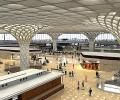
Customs officials at Mumbai international airport intercepted an Indian passenger arriving from Bangkok with 29 exotic wild animals, including a gibbon, melanistic squirrel, ball python, and iguana. A rescue team was called to identify and stabilise the animals, which will be repatriated to their country of origin.

India is closely monitoring Sri Lanka's decision to offer foreign investors control of an airport near the China-controlled Hambantota port, as it could present a rare opening for Indian firms seeking strategic footholds in the Indian Ocean.

Indian benchmark indices Sensex and Nifty surged significantly in early trade, mirroring a global rally and a sharp decline in crude oil prices following the finalisation of a peace deal between the US and Iran to end their 107-day conflict and reopen the Strait of Hormuz.

Market benchmark indices Sensex and Nifty drifted lower in early trade on Monday amid renewed hostilities between the US and Iran. The 30-share BSE Sensex declined 63.65 points to 77,047.63 during initial trading. The 50-share NSE Nifty went marginally up by 16.55 points to 24,070.20. Later, the BSE benchmark dropped 246.54 points to 76,853.93, and the Nifty dipped 50.55 points to 24,005.45. Track Sensex, Nifty on June 29.

Nayara Energy, India's largest private fuel retailer, has reduced petrol prices by Rs 5 per litre and diesel by Rs 3 per litre nationwide, marking the first such cut in over two years. This reduction follows easing tensions in West Asia and stabilised international crude oil prices, though public sector retailers have not yet followed suit.

How India overcame umpteen odds to reintroduce the cheetah on its territory after the handsome cat became extinct in the country decades earlier.
Indian benchmark indices Sensex and Nifty surged in early trade, driven by a rally in IT stocks and tempered expectations of US Federal Reserve monetary tightening following softer-than-expected US jobs data. Track Sensex, Nifty on July 3.
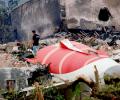
The Federation of Indian Pilots (FIP) on Thursday renewed its demand for a judicial probe into the AI-171 crash and urged authorities not to release any interim investigation report, saying it would create further confusion and speculation.

Indian aviation academies are setting up training facilities abroad where they can churn out pilots as quickly as in eight months, compared to almost two years that it takes in India.
Indian benchmark stock indices, Sensex and Nifty, advanced for the second consecutive day, driven by softening crude oil prices and a positive trend in global markets. Despite some profit-taking in IT and metal shares, auto stocks outperformed, contributing to the overall gains.

Indian stock market benchmark indices Sensex and Nifty rebounded in early trade, driven by a decline in crude oil prices, supportive global cues, fresh foreign fund inflows, and buying in blue-chips like Reliance Industries and HDFC Bank. Track Sensex, Nifty movement on June 22, 2026.

A year after the tragic Air India flight AI-171 crash in Ahmedabad claimed 260 lives, grieving families are still waiting for the final probe report, with investigators yet to release conclusive findings on the disaster's cause.

Paras Defence and Space Technologies partners with Northstar Aviation to provide air-to-air refuelling technologies and support services to the Indian armed forces, enhancing mission endurance and operational flexibility.

Not a single retail outlet ran dry. Every household that wanted a cylinder got one. India faced neither a 1991 moment nor a 2013 one. Macroeconomic stability held. This was not an accident, and it was not luck alone. It was the work of a government that chose to act as it had during the pandemic -- deliberately and gradually, building one measure upon another rather than reaching for a single dramatic lever, explains V Anantha Nageswaran, chief economic advisor to the Government of India.
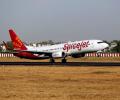
SpiceJet's resurgence, once the new funding is in place, has the potential to disrupt the Indian aviation market in 2024 as the airline will bring its grounded aircraft back to service and lease as many planes as possible to be competitively relevant, aviation consultancy firm Capa India said on Thursday. "Although the market for procuring aircraft in 2024 is exceptionally tight, we expect that SpiceJet will bring stored aircraft back into operations, and will wet or dry lease as much capacity as possible, in order to be competitively relevant. "This will have a material impact on the industry structure, and possibly on domestic profitability," Capa India said in its report.
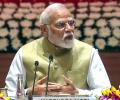
Prime Minister Narendra Modi, in his 'Mann Ki Baat' broadcast, highlighted India's recent achievements in self-reliance, including the maiden flight of the made-in-India C-295 aircraft and the induction of indigenous naval ships. He also lauded the global participation in International Yoga Day and India's success at the World Yoga Asana Championship, alongside Nalanda University's revival of the 'Shastrarth' tradition.

Indian benchmark equity indices, Sensex and Nifty, extended their rally for a fifth consecutive session, driven by optimism surrounding a potential US-Iran peace deal and a significant drop in crude oil prices. Despite hawkish remarks from the US Fed, investors remain hopeful that easing energy prices could temper inflationary pressures.

Civil Aviation Minister K Rammohan Naidu announced that public sector oil marketing companies will implement a partial and staggered increase in jet fuel prices for domestic airlines, aiming to protect passengers from steep fare hikes.

Indian benchmark indices Sensex and Nifty rebounded in early trade, driven by strong buying in blue-chip stocks and positive cues from Asian markets, following a significant selloff in the previous session.
Indian benchmark stock indices, Sensex and Nifty, extended their winning streak for a third consecutive day, driven by positive global market trends and a significant softening of crude oil prices following a peace deal between the US and Iran.
Indian benchmark indices, Sensex and Nifty, closed sharply higher, with the Sensex climbing 1,695.40 points and the Nifty surging nearly 2 per cent, driven by a global market rally and a decline in crude oil prices following US President Donald Trump's declaration that his country has ended the war with Iran.

Search operations have been intensified for four people, who remain missing following a flash flood in Keyi Panyor district of Arunachal Pradesh, officials said on Friday.

Global oil prices fell on Thursday to their lowest levels since before the outbreak of the Iran conflict, offering a significant economic tailwind for India, the world's third-largest crude importer, by easing inflation risks, reducing the import bill and improving the government's fiscal position.

Indian stock market benchmark indices, Sensex and Nifty, experienced declines in early trade due to escalating tensions between the US and Iran, which led to a surge in crude oil prices and weak global equity trends.
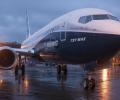
'Indian aviation is having a lesser number of aircraft.' 'Besides the Boeing 737 MAX, you have the A320Neos which Indigo is currently grappling with because of a lack of pilots.' 'This has led to cancellation (of flights) and therefore the prices of air tickets are on the higher side this season although generally in March ticket prices are on the lower side.'

The broader conflict in West Asia, the largest international market for Indian carriers, has forced a sharp reduction in daily flights relative to the summer schedule.

The reopening of the Strait of Hormuz, following a ceasefire agreement between the US and Iran, is expected to significantly ease India's crude oil supply risks, lower freight costs, and reduce inflationary pressures, as global oil prices have already dropped.
Indian stock markets extended their gains for a second consecutive session, with the Sensex closing 736 points higher, driven by a global equity rally and a significant drop in crude oil prices following the finalisation of a peace deal between the US and Iran to end their 107-day conflict and reopen the Strait of Hormuz.
Indian benchmark equity indices Sensex and Nifty closed higher, recovering from previous losses, driven by a global market rebound, a pause in Israel-Iran hostilities, and a rally in bank stocks.

Amazon plans to significantly expand its use of automation and advanced robotics, including systems like the SLAM labeler, across its Indian fulfilment centres. The company, which has committed substantial investments in India, also highlighted its global rollout of autonomous robots like Proteus and cautioned against premature AI regulation that could stifle innovation.

Aviation fuel prices for domestic airlines remain unchanged, providing stability for local carriers, while commercial LPG and 5-kg cylinders see a significant rate hike due to rising international energy costs.
